5 Best Treatments For Low Libido On Antidepressants(Only One Actually Works Around The Block)

I started Zoloft when I was 39. Postpartum anxiety, after my second kid. It saved me, I'm not exaggerating. Six weeks in, the panic that had been running my life since the birth quieted down for the first time in months. I could be a mother again. I could be a wife again.
Except for the last part.
About two months into the Zoloft, something else went quiet too. The wanting. The interest. The whole physical chapter of my marriage. My husband would touch me and I'd feel, nothing. Not annoyed, not avoidant, just nothing. Like someone had unplugged a cable.
I brought it up to my psychiatrist. He told me, and I am quoting directly: “that's a small price to pay for your mental health.” He said it twice across two appointments.
I quietly decided I wasn't paying it anymore.
Turns out, that's extremely common. 60–70% of women on SSRIs experience sexual side effects within months of starting their antidepressant, and most of us are told some version of “small price to pay,” “add bupropion,” or “switch SSRIs and see what happens.” None of which actually fix what's broken.
So I went down the rabbit hole. Talked to a women's health specialist, not my psychiatrist. Tested five different options over 90 days. Compared mechanisms, side effects, and pricing. Here are the 5 best options I found for women who want their sex drive back without changing the antidepressant that's keeping them well.
1. Spark by Amie
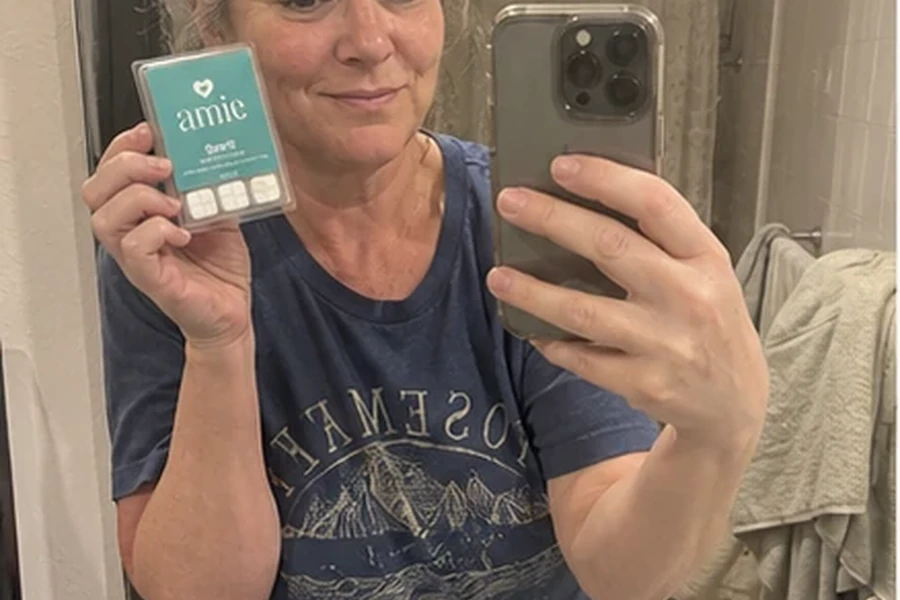
Spark completely changed how I feel about this entire problem. It's a compounded prescription, meaning a real doctor reviews it before it ships, and it combines three actives in one capsule: PT-141 (the desire pathway), Tadalafil (physical arousal), and Oxytocin (the connection part). Taken about 30 minutes before intimacy.
Here's the part that mattered most for me: Spark works on a completely different receptor pathway than my SSRI. PT-141 activates a brain receptor called MC4R, not serotonin. So my Zoloft kept doing what it was doing for my anxiety, and Spark restored what the Zoloft had quietly taken. The two don't fight each other. They don't even talk to each other. Different pathways, different jobs.
This was the part my psychiatrist had never explained. The reason SSRIs flatten desire isn't a mystery, they raise serotonin, which suppresses the wanting signal as a downstream effect. The fix isn't to change the SSRI. The fix is to work around the serotonin block on a different receptor entirely. That's literally what PT-141 does.
I noticed Spark on the first dose. Within 30 minutes. My husband didn't have to ask what was different, he already knew.
The clinician review was the part I didn't expect. You complete an online intake, four minutes, and a real licensed clinician reviews your current medications, including your SSRI, your medical history, and confirms compatibility before anything ships. If they don't approve you, you don't pay. I appreciated that this wasn't a supplement pretending to be medicine.
See if Spark is right for you »EDIT: Amie is currently offering new customers their first month for $89 + free clinician review. Spark uses online checkout, intake after purchase, and clinician review before fulfillment. Checkout first · intake after purchase · ships only if approved. Claim My Treatment »
2. Adding Bupropion (Wellbutrin)
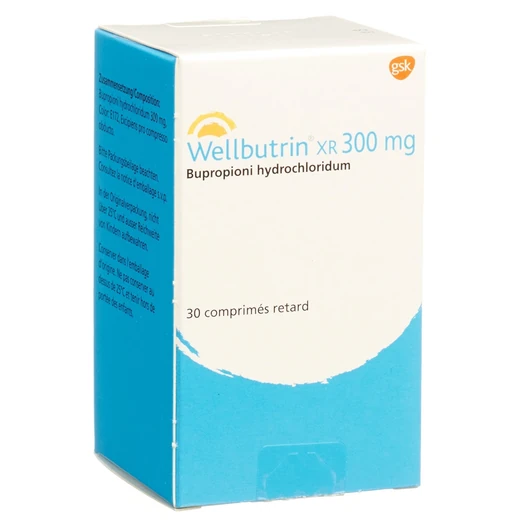
Adding bupropion is what most psychiatrists suggest as the next step when a woman finally builds up the courage to mention sexual side effects to them.
It's the most common second-line approach because bupropion works on dopamine, not serotonin, and a small percentage of women do see some libido improvement.
Here's what nobody mentions: it's a second daily psychiatric medication added on top of your SSRI. The titration takes 4–6 weeks. The side effects can include anxiety, insomnia, and at higher doses, a measurable seizure risk.
I tried it for six weeks. The anxiety came back. I quit and didn't tell my psychiatrist for two months.
If your psychiatrist suggested bupropion and it worked, congratulations, you're in the lucky minority. If it didn't, you already know why this isn't ranked #1.
Compare the add-on route to Spark3. Switching SSRIs
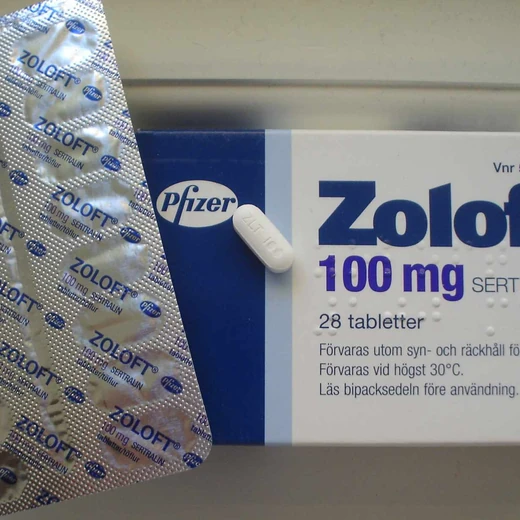
Switching SSRIs is the third thing your psychiatrist might suggest, moving from, say, Zoloft to a different SSRI like Lexapro that may have a slightly different side-effect profile.
The theory is that different SSRIs have different impacts on sexual function and you might land on one that doesn't flatten desire as much.
The reality is that this is a multi-month coin flip. You taper off your current SSRI, start the new one, and wait 8–12 weeks to find out if it works for your mental health, your side effects, and whether the sexual side effects are any better.
I considered it. Then I added up the math: 8–12 weeks of risk, two psychiatrist appointments, one taper, one initiation, and a maybe at the end of it. Spark works in 30 minutes and doesn't touch my Zoloft.
Switching SSRIs makes sense if your current SSRI isn't working for the original problem. If your SSRI is working and the only complaint is sexual side effects, this is a high-risk solution to a problem that has a much simpler answer.
See the route that does not change your SSRI4. Addyi (flibanserin)
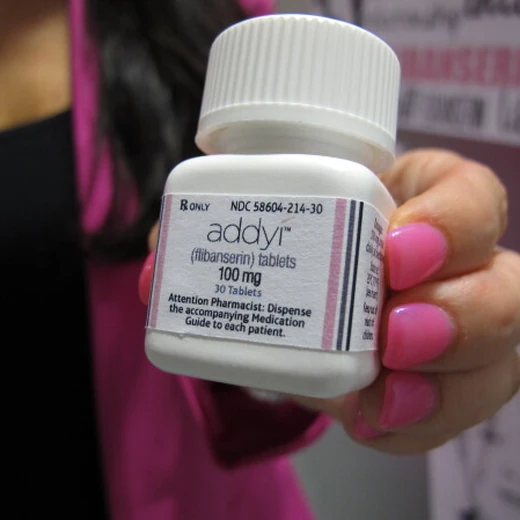
Addyi is the FDA-approved daily prescription for low female desire. It's been around since 2015. It's a real medication. I want to give it credit.
But Addyi has three problems for women on SSRIs specifically.
One: it works on serotonin. Same neurotransmitter system as your SSRI. The interaction risk is real and your psychiatrist will probably not let you take both.
Two: it requires a strict no-alcohol rule, and the interaction risk with alcohol, fainting and severe low blood pressure, is the main reason it has a black-box warning.
Three: it's around $1,173/month retail without insurance, and it takes 4–8 weeks before you know if it's working.
For a woman already on an antidepressant who just wants intimacy back without giving up wine and adding a daily four-figure pill, Addyi is the wrong category of solution.
Compare Addyi to Spark5. HerSolution & Drugstore Libido Supplements
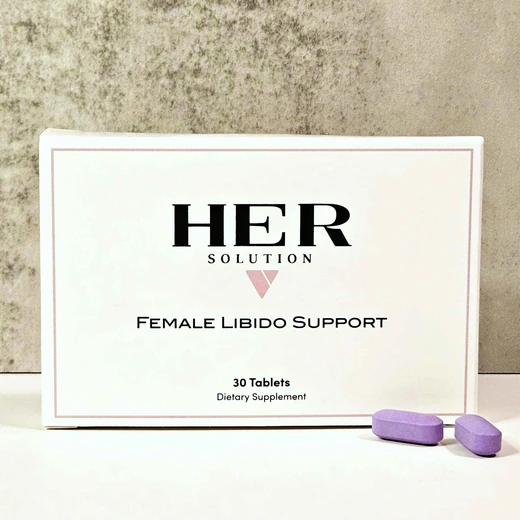
I'm grouping these together because they're functionally the same answer: a $15–$50/month supplement with herbal ingredients that have “been shown to support female libido” in studies with very loose definitions of “shown” and “support.”
HerSolution. OLLY Lovin' Libido. Provestra. Lady Prelox. The capsules at GNC. The gummies at Target.
These are not designed to address SSRI-induced sexual dysfunction. They're designed to address mild, general “I want a little extra spark” desire complaints in women without a clear pharmaceutical cause.
I tested HerSolution for 30 days. I felt no measurable difference. Same with the gummies a friend sent me.
If your problem is “my SSRI took the wanting away and I want it back,” supplements aren't going to bridge that gap. The block is biochemical. You need something that works on the receptor, not in the general vicinity of it.
Skip the supplement laneBottom Line: What Actually Works?
If you're a woman on an SSRI and you've lost meaningful desire, your options have historically been: add a second psychiatric medication and hope; switch SSRIs and gamble three months of mental health stability; take Addyi and give up alcohol indefinitely for $1,173/month; try supplements and accept they probably won't work; or live with it because that's what your psychiatrist told you to do.
That's why I recommend Spark by Amie. It's the only treatment I tested that works around the serotonin block, on a different receptor entirely, in one dose, on-demand, without changing the antidepressant that's keeping me well.
You don't have to choose between being stable and feeling wanted. That was never the right choice. It was just the only one anyone offered you.
With PT-141 for the desire pathway, Tadalafil for arousal, and Oxytocin for connection, Spark addresses what SSRIs actually take. It's my #1 pick for a reason.
Click here to learn more about Spark »
Please note: my tests were not scientific and everyone's body is different. Spark is a compounded prescription and requires intake plus clinician review before fulfillment. Refundable if Spark is not clinically appropriate after review. Do not stop or change your antidepressant without consulting the prescriber who manages it. Spark works alongside your existing SSRI/SNRI, it does not replace it. Always talk to your doctor about your specific health needs.